
Church Fall Festival Ideas That Draw New Families
A church fall festival brings new families in when it runs on a few high-draw attractions instead of a long row of small booths, keeps admission free, and puts at least one hosted attraction on the lot that needs no volunteers at all. Most St. Louis area churches land on two hours on a mid-October Friday or Saturday evening.
"This was an excellent addition to our church VBS. The kids (and adults) loved the truck." That's Amanda Citchen-Taylor, and the word that matters most to a festival committee is adults. A church grows out of a fall festival when the grown-ups stay in the lot long enough to talk to somebody they did not arrive with.
We work these events across St. Louis and Metro East Illinois every October, for small congregations and large. What follows is what we watch happen from the parking lot, including the part that rarely makes the planning binder.
What a church fall festival is
A church fall festival is a free, family-facing October event held in a church parking lot or gym, built around games, food, and candy, offered as a warmer, better-lit alternative to walking a neighborhood on Halloween. Some churches call it a harvest party, a fall fun night, or a fall carnival. The name changes and the purpose does not, because a fall festival points outward at the neighborhood rather than inward at the congregation, and that shapes everything after it.
The volunteer math that decides whether it works
Every booth on your map costs one member for the entire event. That member spends two hours behind a folding table running a bean bag toss, and the whole time, they are not meeting the family from three streets over who came because a flyer landed in their door. Twenty booths means twenty of your people are unavailable for the one thing the festival exists to do.
So build it backwards. Count the adults who will realistically serve, hold a third of them back for greeting, parking, and the check-in table, then design the festival that the other two thirds can staff without anybody working the entire night. For most churches that lands somewhere around six to ten stations instead of twenty, and the space left over gets filled by attractions that show up with their own staff.
"Another GREAT experience with Me 2 You Game Truck as they kept the children with cancer and their siblings busy while the parents had time for sharing." That's Traci Riechmann, about a different kind of event, and it is the same trade a fall festival makes. Somebody has to hold the kids so the adults can have the conversation.
Fall festival games and booths worth a volunteer
The stations below hold a line all evening and each one runs on one or two people:
- Cake walk. Still the highest return per volunteer, and it gives the bakers in your congregation something to contribute.
- Pumpkin ring toss. Painted milk jugs and plastic rings, set up in ten minutes, and small kids play it six times in a row.
- Duck pond. A kiddie pool, numbered rubber ducks, and a prize bin. It keeps three-year-olds occupied while their older siblings are somewhere louder.
- Donut on a string. Cheap, hands behind your back, and it produces the best photos of the night.
- Costume or pumpkin-decorating contest. Judge it at a fixed time and announce it twice, because a published finish time keeps families from leaving at the 40-minute mark.
- A trunk-or-treat row. Ten decorated trunks along one edge of the lot turn candy into a walk with a beginning and an end.
- Photo backdrop. Hay bales, corn stalks, and a sign with your church name on it, staffed by nobody. Parents run it themselves, and the sign ends up on their feed.
- Chili or hot dog line. Free food is the reason a hesitant family gets out of the car, and the line is where the real conversations happen.
Attractions that hold a crowd and cost you no volunteers
An attraction is hosted when the vendor brings a named person who sets it up, runs it for the whole event, and packs it down afterward. That distinction matters for a church, because a hosted attraction adds a major draw without changing your volunteer count by one.
What we see work on a fall festival lot:
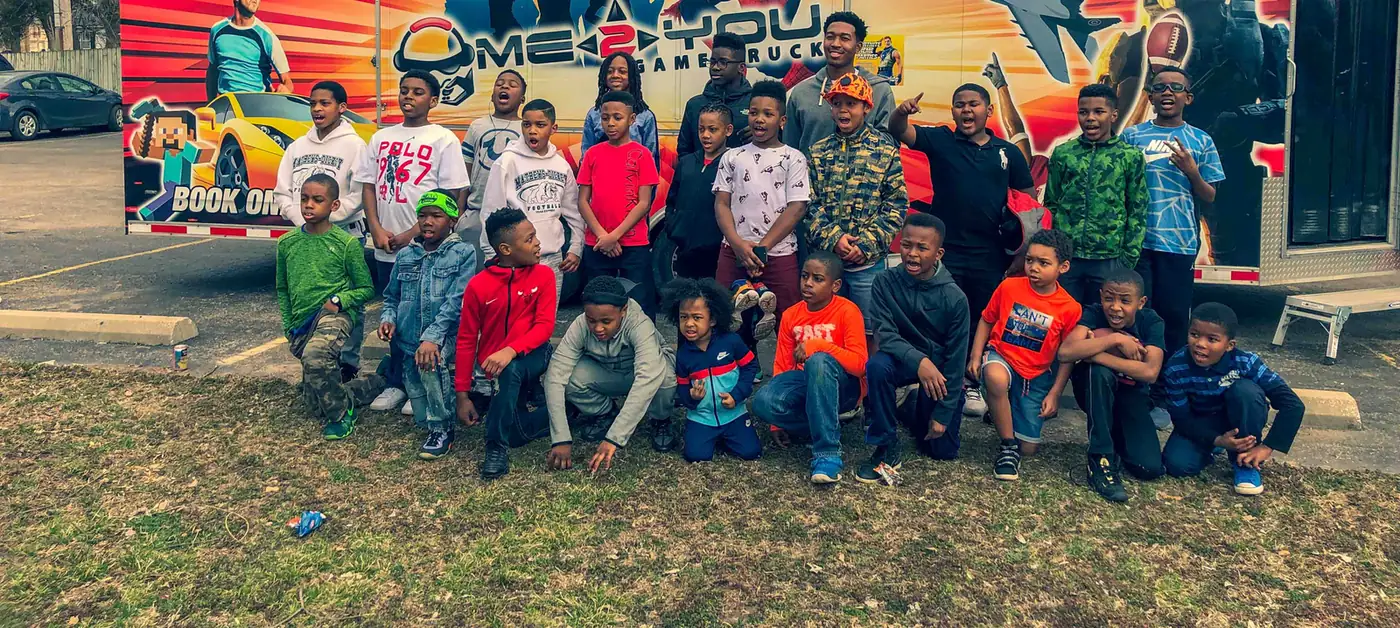
- A game truck. Seven stations, up to 20 players at once, and around 60 kids an hour move through it at $300 per hour for a church or school event. It runs on its own generator, so it never touches your building's power, and it stays warm after the sun drops. Best for ages 8 to 15.
- Laser tag. Up to 20 players, indoor or outdoor, and the taggers reach about 600 feet, so a side lawn or the far end of the lot is enough field. It holds the middle schoolers who are too old to be excited about candy, ages 8 and up.
- Inflatables. Bounce houses, obstacle courses, and sport games, delivered and anchored, from $200 per unit. This is where the under-8 crowd goes, and it is why their parents get twenty unbroken minutes.
- Virtual reality. Four Meta Quest 3 headsets with a host on them the whole time. The line forms early and does not break.
- RC racing. A custom track for up to 16 racers, good for a gym or a flat stretch of lot where an inflatable will not fit.
- Game arena. A pop-up console lounge on big screens, the right answer when your festival lives in a fellowship hall instead of a parking lot.
"We love having the game truck and laser tag at our events!" That's Gateway Students, a St. Louis youth group that has had us out more than once. An attraction kids ask for again in the spring is doing more for you than a booth ever will.
The question a parent will ask, and the answer to have ready
The moment you put video games at a church event, somebody on your board or in your lobby will ask what the kids are playing. Have the answer ready, because a good one closes the subject fast.
You pick the titles and the ESRB ratings in advance. We default to E for Everyone and Teen, and anything mature only runs if your church approves it, which means the answer to a concerned parent is that the church chose the list. Our hosts are background-checked, which is worth saying out loud at a children's event even when nobody asks.
Layout, timing, and the numbers to plan against
Set the stations in a loop so families move one direction and nobody backtracks into a line. Put food in the middle where the crowd will not block a game, and the biggest attraction at the far end, so reaching it means walking past everything else.
On timing, 5:30 to 7:30 on a Friday or 4:00 to 6:00 on a Saturday, mid-to-late October, before the time change takes your light. Two hours is the right length, and three means the last hour is your volunteers standing around a lot with fifteen people in it.
On space, a game truck needs about 55 feet to park with a clear path in and out, so find that spot in August and cone it off that morning. On lighting, a lot that goes dark empties within ten minutes, so either borrow light towers or end while there is still sky. And on money, churches book with us at no deposit, the W-9 goes out right away, and we request your COI as soon as you book.
Planning it in three passes
Eight weeks out: the decisions that cannot move later
Two things get locked now, and the rest of the plan inherits them. Pick the date and the rain date, and book your attraction the same week, because October Saturdays are the first to go and they go earlier every year. Then count your volunteers and set the station list against that number rather than the one you are hoping for.
Six to three weeks out: people, not logistics
Open sign-ups by station name. Members say yes to running the duck pond far faster than to helping out at the festival, and a named job means somebody owns it on the night. Print invite cards and hand them out from the front, because a card a member gives a neighbor outperforms a public post, and it is the cheapest thing on this list. Then post it where your neighborhood reads, which around here means a community group page, the school newsletter if you can get into it, and a sign at the road.
The last two weeks: the map and the morning
Walk the lot and draw it, including where a truck or trailer parks, how it gets out, and where the food line will bend once it doubles. Send that map to every station lead, and confirm arrival windows with your vendors. On the day, volunteers come 60 minutes early and attractions 60 to 90 minutes early, and one person owns check-in so nobody wanders the lot looking for their spot.
"They showed up on time, were set up and ready to go when the doors opened." That's Jeanne Reis, about a school Fun Night, and it is the one part of that morning you hand to somebody else.
The rain plan, decided in September
Late October around St. Louis will hand you a cold drizzle roughly one year in three, and the festivals that survive it made the call weeks earlier. Pick a decision time, usually noon the day of, name the person making it, and say where it gets posted so nobody has to call the church office.
Ask your vendors what they do in weather before you sign. We move indoors to a gym or fellowship hall when a space is available, and the game truck is heated, which is why it tends to be the last thing still going at a cold event.
What the committee gets back
A fall festival is the one night a year your church gets to be the friendliest building on the street, and the committee that plans it usually spends the evening fixing things instead of enjoying that. Every station you hand to a hosted vendor is an hour you get back, and outreach is people talking to people, none of which happens while you are refilling a candy bowl.
We bring the attraction, a named host who runs it start to finish, and paperwork your treasurer will not chase. You get to walk your own lot and meet the families who came, which is why you volunteered for this.